The Digital Public Goods Alliance is a multi-stakeholder UN-endorsed initiative that facilitates the discovery and deployment of open-source technologies, bringing together countries and organisations to create a thriving global ecosystem for digital public goods and helping to achieve the sustainable development goals.

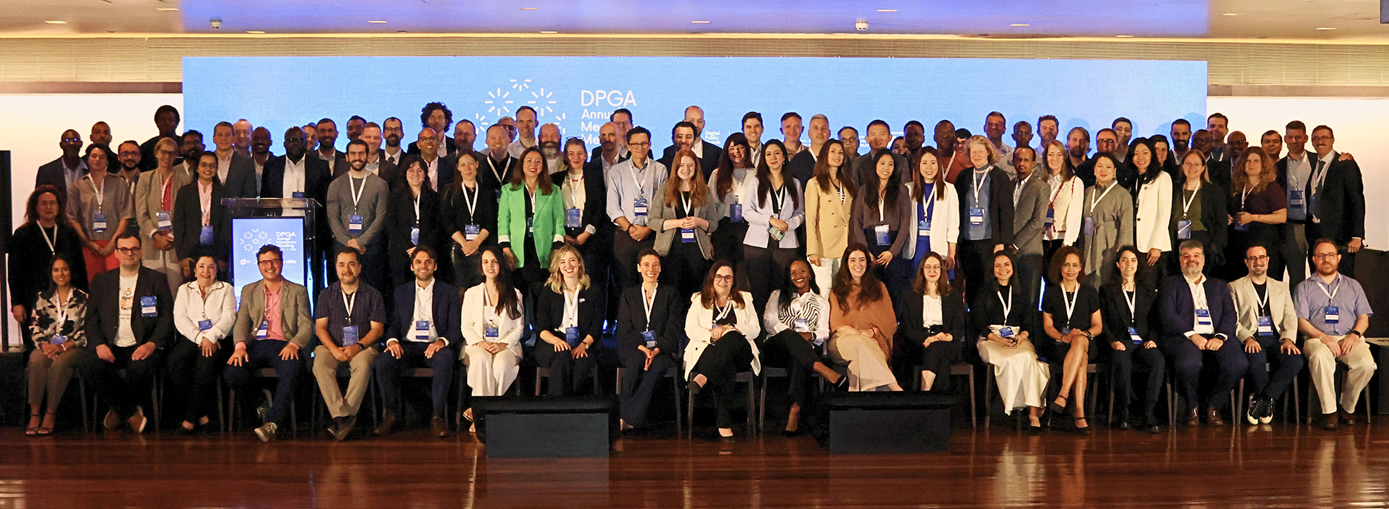
DPGA Annual Members Meeting in Singapore, November 26, 2024
The Digital Public Goods Alliance is a vibrant global community of national governments, multilaterals and international non-and for profit organisations aligned around a shared vision for digital cooperation and accelerating attainment of the SDGs through digital public goods.
The DPGA Secretariat uses the DPGA Annual Roadmap as a formal coordination, alignment, engagement, and communication tool for the DPG ecosystem.
Our members consist of national governments including their agencies; multilateral organisations including UN entities; philanthropic foundations, funders, and think tanks; and technology companies.
Membership in the DPGA is not a legal commitment but rather a way to publicly represent a commitment to advancing a shared vision, transparently monitoring and sharing activities, and working collaboratively as part of the DPGA to support digital public goods.
The DPGA relies on engagement and leadership from countries, private sector technology experts, think tanks, governments, philanthropic donors, international implementing organisations, and the UN to create a thriving global ecosystem for digital public goods.
We use a Roadmap as a coordination, alignment, engagement, and communication tool to capture the activities of DPGA members working to significantly advance the four DPGA strategic objectives described in the 5 year strategy.
Each year, the DPGA Secretariat publishes "The State of the DPG Ecosystem" report which provides further insight into the DPG-related activities that DPGA members have undertaken that year.
Our members consist of governments including their agencies; multilateral organisations including UN entities; philanthropic foundations, funders, and think tanks; and technology companies.
Photo By: NASA Web Map Services
General António Guterres, UN Secretary-General
Source: unstats.un.org/sdgs/report/2020
As we approach 2030, it has become abundantly clear that high-quality, open-source digital solutions play a critical role in the attainment of the sustainable development goals. While global challenges like the COVID-19 pandemic have brought significant hardship, we have also seen firsthand that digital public goods have enabled governments to swiftly adapt and implement innovative digital solutions that are helping them respond to immediate health and social protection needs.
DPGA’s 5 year strategy lays the groundwork for collaboration with governments, industry, the UN, civil society, and more. This strategy is the result of a collaborative effort from more than 30 members, an expanded Board, hundreds of experts in communities of practice, and participation in numerous conferences and events which provided invaluable ideas, input, and feedback.
The Digital Public Goods Alliance stewards and maintains the DPG Standard and Registry, advocates for the implementation of DPGs, and convenes expert communities of practice to work on topics like climate change and disinformation. As a members-based alliance, the DPGA brings together creators, implementers, and supporters working towards a shared global vision for DPGs, and coordinates and mobilises resources in priority areas to facilitate a healthy DPG ecosystem, facilitating growth, sustainability, and impact.
Approved by the board in 2023 these objectives indicate what we hope to achieve through the collective work of the Alliance over the 5 year period of the strategy.
Digital public goods with high-potential for addressing critical development needs and urgent global challenges are discoverable, sustainably managed, and accessible for government institutions and other relevant implementing organisations.
UN-institutions, multilateral development banks and other public and private institutions that are of high relevance for supporting implementation of digital technologies have the knowledge, capacity, and incentives to effectively promote and support adoption of DPGs.
Government institutions have the information, motivation, and capacity to effectively implement DPGs that address country needs, including to plan, deploy, maintain, and evolve their digital public infrastructure.
Countries have public sector capacity and vibrant commercial ecosystems in place to create, maintain, implement, and incubate DPGs locally.

We leverage the global endorsement from the UN Secretary-General, international forums such as the UN General Assembly, the World Bank & IMF Annual Meetings, G7/G20, regional organisations such as the African Union and the European Union, and a coalition of high-level (c-suite/heads of state) supporters to advocate for transformation in policies, practices, and resource mobilisation.
We convene diverse groups of experts in Communities of Practice (CoPs) to identify, assess and advance DPGs with high potential for addressing critical development needs and urgent global challenges. CoPs facilitate cooperation and coordination between entities and across sectors/domains which enables the DPGA to identify, recommend, and advocate for DPGs with high impact-potential.


We mobilise and align donors around existing and effective funding structures that cover relevant parts of the DPG ecosystem, and help create new funding, support structures, and mechanisms needed to fill relevant gaps1. This includes leveraging innovative financing and new opportunities presented by digital finance, while exploring how private capital could be raised to support financially sustainable models. We will engage the private sector strategically and sustainably around open source technologies and open content and data initiatives.
Building upon the DPGA’s origins, and leveraging the endorsement of the UN Secretary-General, we engage centralised UN structures, like the UN Technology Envoy’s Office and the UN Innovation Network (UNIN), as well as sector-specific UN agencies, the World Bank and other development banks, regional institutions like the AU and EU, and bilateral and philanthropic donors to address and remove systemic barriers that limit stakeholders’ capacity to procure, produce, and support country adaptations and implementations of DPGs. This includes capturing use cases, developing toolkits, and expanding awareness of open source and open licensing options.


The DPGA works with government entities and regional hubs to change the power balance around technology solutions. The DPGA supports the development of local capacity for the creation of new DPGs and for locally managed adaptation and implementation of existing DPGs. We use decentralised processes and frontier technologies to distribute opportunities for contributing to, and benefiting from, the work of the DPGA. We make tools and resources available to governments to navigate public procurement issues, and for supporting and advocating for the development of new government policies and procurement practices. We work to bolster and expand the impact of existing support structures that provide non-financial, technical, legal, and training assistance for the creation, implementation, and management of DPGs.
In support of the DPGA Vision and Objectives, the following four operational targets have been developed to prioritise, coordinate, and align DPGA member and stakeholder efforts:

By the end of 2028, 50 countries have leveraged digital public goods to design, launch and scale at least one component of their digital public infrastructure stack, in a manner that is safe and inclusive, and enables one or more priority use cases.
Visit: 50-in-5 Campaign's website

By the end of 2028, sustainably maintained and highly relevant digital public goods:
Read more: Blog post on Climate Change

By the end of 2028, sustainably maintained and highly relevant digital public goods:
Read more: Blog posts on Information Pollution

By the end of 2028, digital public goods are part of the international community’s default approach for rapidly empowering relevant stakeholders to prevent and respond to urgent global challenges, including through;
Read more: Calls For Collaborative Actions
Digital public goods are inherently collaborative technologies that can be jointly built and allow others to build on top and adapt them for their unique contextual needs. However, to maximise their potential to foster innovation, transform lives, facilitate sustainable development, and strengthen economies on a global scale, action from both countries and organisations is needed.
Discussions with experts in digital public infrastructure, climate action, and public interest AI have underscored the need for coordinated, multi-stakeholder action in order to support digital public goods. For this reason, in 2025, the DPGA Secretariat launched its first-ever set of Calls for Collaborative Action. These calls are designed to galvanize support and signal to stakeholders actions they can take to contribute to the success of digital public goods in highly impactful areas.
The DPGA Secretariat is currently convening meetings with stakeholders that have signalled an interest in contributing to each of the calls. These meetings will help us define the precise actions that those interested in supporting a Call for Collaborative Action can take. The DPGA Secretariat encourages DPGA members, DPG product owners, and other stakeholders that are well placed to contribute to participate.
In Q2 of 2025, this site will evolve into a place where stakeholders can learn about the actions various stakeholders are undertaking to support these calls. Stay tuned for updates. Please reach out at hello@digitalpublicgoods.net if you have any questions or suggestions on ways to contribute.
Each year, the Secretariat publishes The State of the DPG Ecosystem report which provides further insight into the DPG-related activities and organise the DPGA Annual Member Meeting.

State Of The Digital Public Goods Ecosystem Report
This year's State of the DPG Ecosystem Report shows the progress that the Secretariat has made in 2024 to help advance the ecosystem. This includes the updated DPGA Roadmap and tools that now share more up-to-date information about the innovations that DPGA members are driving, and the DPG Registry now contains important information about DPGs that many stakeholders refer to for.
The DPGA Governance Board functions as a strategic decision-making and oversight body for the DPGA Secretariat. The Board consists of member-organisations who are exemplary members, demonstrating a strong commitment to digital public goods and significantly advancing the strategy of the DPGA.
As of November 2023, the DPGA Governance Board Members are:
The current Governance Board consists of six member-organisations who demonstrate a strong commitment to digital public goods and are supporting the DPGA's mission and mandate.
The DPGA is a direct response to The Age of Digital Interdependence which called for, “the creation of a broad, multi-stakeholder alliance, involving the UN, that can support digital public goods”, and has subsequently been endorsed by the UN Secretary-General as a means for improving international digital cooperation. Established as a coordinated initiative of the founding organisations; iSPIRT, Norway, Sierra Leone, and UNICEF, the DPGA has collaboration at its core.
Supports, coordinates, and facilitates alignment among a community of like-minded organisations via an independent, neutral DPGA Secretariat which is overseen by a Governance Board.
Functions as a strategic decision-making and oversight body for the DPGA Secretariat.
Consists of member-organisations who are exemplary members, demonstrating a strong commitment to digital public goods and significantly advancing the strategy of the DPGA.
The Digital Public Good Alliance Secretariat is responsible for the operations of the DPGA. The DPGA Secretariat leads the creation and maintenance of foundational components vital to the DPG ecosystem and facilitates alignment among a community of like-minded organisations in order to advance digital public goods. This includes stewarding and maintaining the DPG Standard and Registry, advocating for the implementation of DPGs, and convening expert communities of practice to work on topics like climate change and disinformation to facilitate a healthy DPG ecosystem, facilitating growth, sustainability, and impact.
The DPGA Secretariat is led by a CEO who manages the DPGA Secretariat as an independent entity accountable to the Governance Board.

DPGA Secretariat team at the Annual Members Meeting in Singapore, 2024. Photo Credit: Derrick Ng Jun Peng
The Digital Public Goods Alliance Secretariat depends on agreements with a limited number of funders for financing of its operations
All DPGA funders agree to operate in alignment with the DPGA's Financing Code of Conduct which has been developed to ensure that the DPGA Secretariat can be sustainably financed to work with neutrality and integrity to advance the DPGA's mission, strategic objectives, and targets.
The Digital Public Goods Alliance stewards and maintains the DPG Standard and Registry, advocates for the implementation of DPGs, and convenes expert communities of practice to work on topics like climate change and disinformation. As a members-based alliance, the DPGA brings together creators, implementers, and supporters working towards a shared global vision for DPGs, and coordinates and mobilises resources in priority areas to facilitate a healthy DPG ecosystem, facilitating growth, sustainability, and impact.
The dedicated professionals driving the Digital Public Good Alliance forward

If you have questions, please contact us at:
hello@digitalpublicgoods.net